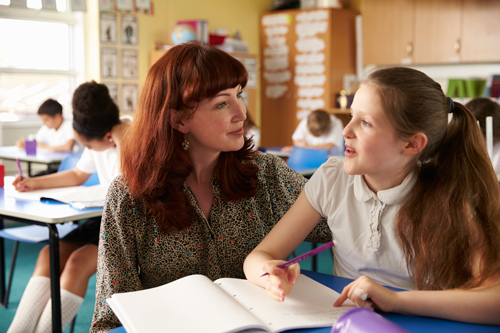
Learning is complex. It all starts with learning goals and student outcomes. Typically, it starts with a learning engagement (activity) to provide an introduction to a concept. Students participate in a trial-and-error phase that includes feedback from peers and from their teacher. The student reflects upon this information. The student may implement corrective actions and request additional feedback. Many call this a feedback loop. Re-teaching may need to occur.
Each of these interactions with students is different. Student learning is individualistic. The teacher works with each student to meet their diverse learning needs. This requires the teacher and the student to remember where the conversation left off from the previous interaction, whether face-to-face or asynchronous via an email, message, or written feedback on paper. The sheer number of students and the multiple conversations per student, along with the many places where qualitative learning data may reside (notebooks, papers, posters, cloud-based applications, videos, emails, EdTech learning tools, and so on), is a Herculean organizational task for any teacher. On the student side, in the middle school and high school models, they have to manage seven to eight classes and the learning conversations they have with their teachers. Also quite an organizational task.
In 2016, I came to the realization that I was spending nearly half of my time searching for elements of these conversations. For example, a lesson where students were to determine the theme or central idea of a text and how it is conveyed through particular details can be incredibly hard to organizationally manage, let alone provide individual feedback to students. In this particular lesson students had already been through a class example and were attempting to determine the theme or central idea in the novel that they were reading. With over 100 students, this is 100 different texts and 100 different sets of feedback. Did the students write their thoughts in their notebooks or in an online document? The feedback that I provided each of them is individualized and incredibly important. Will I remember in a week what that feedback was? Has the student shown growth from that feedback, or do I need to reteach?
The act of teaching reaches its epitome of success after the lesson has been structured, after the content has been delivered, and after the classroom has been organized. The art of teaching, and its major successes, relate to what happens next. — John Hattie, Visible Learning
The "next" referenced above is the learning conversation.
As a classroom teacher, over a couple of school years, I refined what I, my fellow teachers, and our students needed for our learning conversations. This is how gotLearning was born and matured. It allowed a teacher to manage individual student learning journeys. During this time a couple of really cool things happened. We realized how much more time we had to focus on student learning instead of searching for where an online word processing document was stored (Google Docs, Microsoft Word, Apple Pages) only to realize the student had turned it in handwritten on paper.
The more we used this new tool, the more valuable it became. As a teacher I was able to review feedback that I had previously given to a student. Feedback and reflections were no longer only in one place. I now had a copy of it and so did the student. We both could refer back to it and build upon it. At parent-teacher conferences we were able to show a student's growth from August to October. We did this by showing qualitative evidence.
Watch a Learning Conversation in gotLearning →
Hattie, John. Visible Learning: A Synthesis of over 800 Meta-Analyses Relating to Achievement. Routledge, 2010.